
The Wendell G. Freeland Society (the “Freeland Society” or the “Society”) is a new litigation honor society comprised of judges, lawyers and law students dedicated to the advancement of litigation excellence. The Freeland Society is a 501(c)(6) organization, named after storied local litigator, civil rights advocate and military hero, Wendell G. Freeland, the Freeland Society emphasizes the creation of significant educational and mentoring experiences for its members, designed to enhance and develop their legal skills and contribute positively to their growth as effective and ethical litigators. Judges and lawyers who have at least ten (10) years of litigation experience; who have demonstrated excellence in any litigation discipline – civil, criminal, appellate or arbitration – as recognized by peers in their community; who have demonstrated a commitment to fostering an inclusive legal profession through mentorship, promotion and/or sponsorship; who are active, enthusiastic and engaged; and who exhibit the highest ethical standards, may be invited, or may apply, to become Fellows of the Society. Members of the Freeland Society (as distinct from Fellows) are lawyers of any level and/or law students who exhibit a strong desire to achieve the qualifications of a Fellow. Membership in the organization currently is capped at 200 individuals.
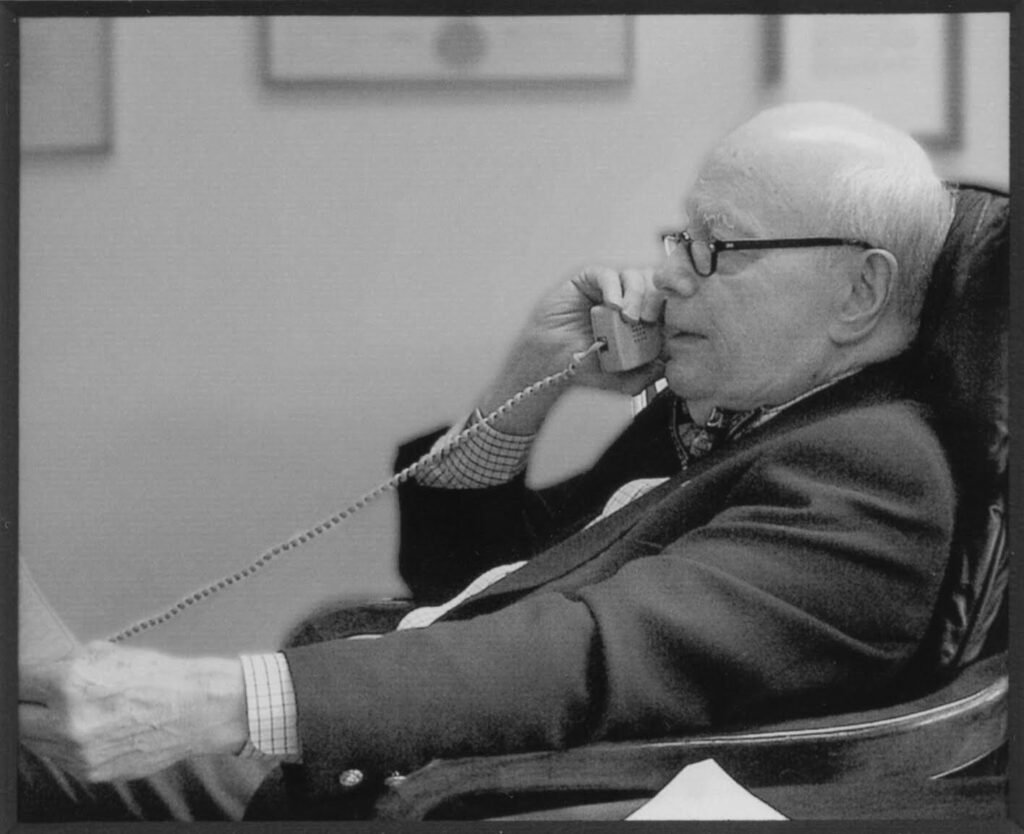

Wendell G. Freeland was born in Baltimore, Maryland on February 21, 1925. His family lived in a poor neighborhood in a segregated city, and Wendell attended segregated schools throughout his childhood. He graduated from Frederick Douglass High School in 1941 and won a scholarship to Howard University. While at Howard, Wendell joined the Army Air Corps. He said he joined the military to fight growing fascism in Europe, not to fight for a country that denied its own citizens basic human and civil rights.
While in the Army, Wendell was a member of the Tuskegee Airmen, serving as a bombardier with the 477th Bombardment Group. Although he was a lieutenant, he remained a second-class citizen in the Army. He was arrested twice for defying the Army’s strict segregation policies. His second arrest was for his involvement in what is now called “The Freeman Field Mutiny.” Wendell and other airmen were arrested for entering a “white officers” club. When he and 100 others refused to sign, read, or even acknowledge the regulation strictly separating white and Black officers, they were charged with mutiny, a crime punishable by execution. Wendell was only 19 years old.
Following his service in the military, Wendell returned to Howard and graduated cum laude in 1947. He earned his law degree from the University of Maryland School of Law in 1950 and graduated with honors. He was the first Black student at Maryland to be elected to the Order of the Coif, an honorary legal fraternity.
Wendell and Jane, his wife of 67 years, moved to Pittsburgh in 1950 and Wendell was admitted to the Pennsylvania Bar in 1951. He started his legal career at the Smith Jones law firm whose two principals – Henry R. Smith and Richard F. Jones – were two of only a handful of Black lawyers practicing in Pittsburgh at the time. Wendell later worked as an assistant district attorney in Allegheny County and then returned to private practice for the remainder of his career. His practice included all kinds of cases, but he focused on criminal and civil rights cases. He understood the connection between the two and often spoke about how racism infected the administration of justice.
One of the first matters Wendell took on after arriving in Pittsburgh was the Highland Park Swimming Pool case, in which he, Richard F. Jones, and Henry R. Smith sued the City of a Pittsburgh to ensure the safety of Blacks who tried to swim at the pool. Rather than bring a claim based on racial discrimination, they claimed the pool was a nuisance and danger to city residents, as Blacks who tried to swim there were harassed and pelted with rocks.
Wendell’s many contributions to the City of Pittsburgh and to its legal and civil rights communities are too numerous to catalog. Some highlights include his service as the first President of Neighborhood Legal Services, President of the Homers S. Brown Law Association, Member of the House of Delegates of the Pennsylvania Bar Association, and a member of the Judicial Conduct Board of Pennsylvania. Wendell also served as Chair of the Urban League of Pittsburgh Board of Directors, Senior Vice President of the National Urban League Board of Trustees, Chairman of the Board of Governors of the Joint Center for Political and Economic Studies and was a member of many boards, including the Board of Trustees of the University of Pittsburgh and of Westminster College, Board of Visitors of the University of Pittsburgh School of Social Work, and the Board of Directors of the University of Pittsburgh Medical Center. He was also a founder of the Hill House Association.
Wendell’s efforts while with the Urban League laid the foundation not only for desegregation of the city’s public schools, but also for the hiring of Black teachers. He pressed corporate boards to invite African Americans to the table and tirelessly advocated for the advancement of women and minorities within the legal field.
Toward the end of his career, Wendell helped convince the Supreme Court of Pennsylvania to admit, posthumously, George B. Vashon, to the Pennsylvania Bar. Vashon had twice been denied admission to the Allegheny County Bar in 1847 and again in 1868 because he was a Black man. One of his proudest moments was presenting the Certificate of Admission to Mr. Vashon’s family following a ceremony in 2010.
At the time, Wendell said, “it’s significant in my opinion, because it is an indication that some of the wrongs of the past – though certainly not all – can be rectified if there is an entity capable and willing to do it.”
Chair
Chair-Elect
Secretary
Treasurer/Finance Chair
Membership Chair
Programming Chair
Wendell G. Freeland Chair
| Arun Thomas |
| Hon. Cathy Bissoon |
| Hon. Cindy Chung |
| Hon. J. Nicholas Ranjan |
| Jason Hazelwood |
| Jeanette Ho |
| Jennifer Andrade |
| Katie Jacobs |
| Lisa Freeland |
| Lourdes Sánchez Ridge |
| Maria Rivera Johnson |
| Rebecca Haywood |
| Rich Ting |
| Shanicka Kennedy |
| Soo Song |
| Tarek Abdalla |
| Alexandria Samuel (PNC) |
| Andrew Lipson (FPD) |
| Audrey Kwak (Eckert) |
| Bryan Neft (Spilman, Thomas & Battle) |
| Hon. Christy Wiegand |
| Hon. Cynthia Eddy |
| Hon. Timothy Lewis (Schnader) |
| Jackie Celender (K&L) |
| Jay Finklestein (FPD) |
| Jayme Butcher (Blank Rome) |
| Joanne La Rose (Fed Ex) |
| John McIntyre (Reed Smith) |
| Judge William Stickman |
| Keith Whitson (Schnader) |
| Kimberly Brown (Jones Day) |
| Linda Cohn (FPD) |
| Louis Long (Thomas, Thomas & Hafer) |
| Mark Phillis (Littler) |
| Michael Comber (Reisinger Comber & Miller) |
| Michael Novara (FPD) |
| Patrick Livingston (solo) |
| Randall McKinney (solo) |
| Robert Bracken (solo) |
| Robert Ridge (Clark Hill) |
| Sara Rose (ACLU) |
| Stephen Kaufmann (USAO) |
| Tina Miller (Reisinger Comber & Miller) |
| Traci Rea (Reed Smith) |
| Troy Rivetti (USAO) |
| Tyra Oliver (Superior Court) |
| Vic Walczak (ACLU) |
| Yuanyou (Sunny) Yang (Porter Wright) |